



My dog, Cooper, stands over his tennis ball, poised to run, staring directly into my eyes.
I can read his mind.
Throw the ball, Mom. Throw. The. Ball.
At this moment, Cooper is using 100 percent of his considerable mental capacity to persuade me to throw—or kick—the ball so he can do what he LIVES for:
Retrieve.
Cooper is 100 percent field Labrador, and the moment we head downstairs, he starts going crazy.
His collection of tennis balls waits on the front porch, where he carefully selects one before each outing. Then he’s off—focused, enthusiastic, completely engaged with life.
He radiates ALIVENESS.
And Cooper does not believe retrieving should be a solitary pursuit.
He approaches perfect strangers on the street, carefully places his disgusting, soggy ball at their feet, and looks directly into their eyes.
The message is unmistakable:
You. Yes, you. Throw my ball.
And somehow these unsuspecting victims bend down, pick up a ball they probably don’t want to touch, and throw it.
Cooper has remarkable confidence in his ability to get people to play.
When we finally return home, he deposits the soggy ball back on the porch with the rest of his collection, ready for tomorrow.
This is who Cooper has always been.
Ball. Run. Retrieve. Repeat.
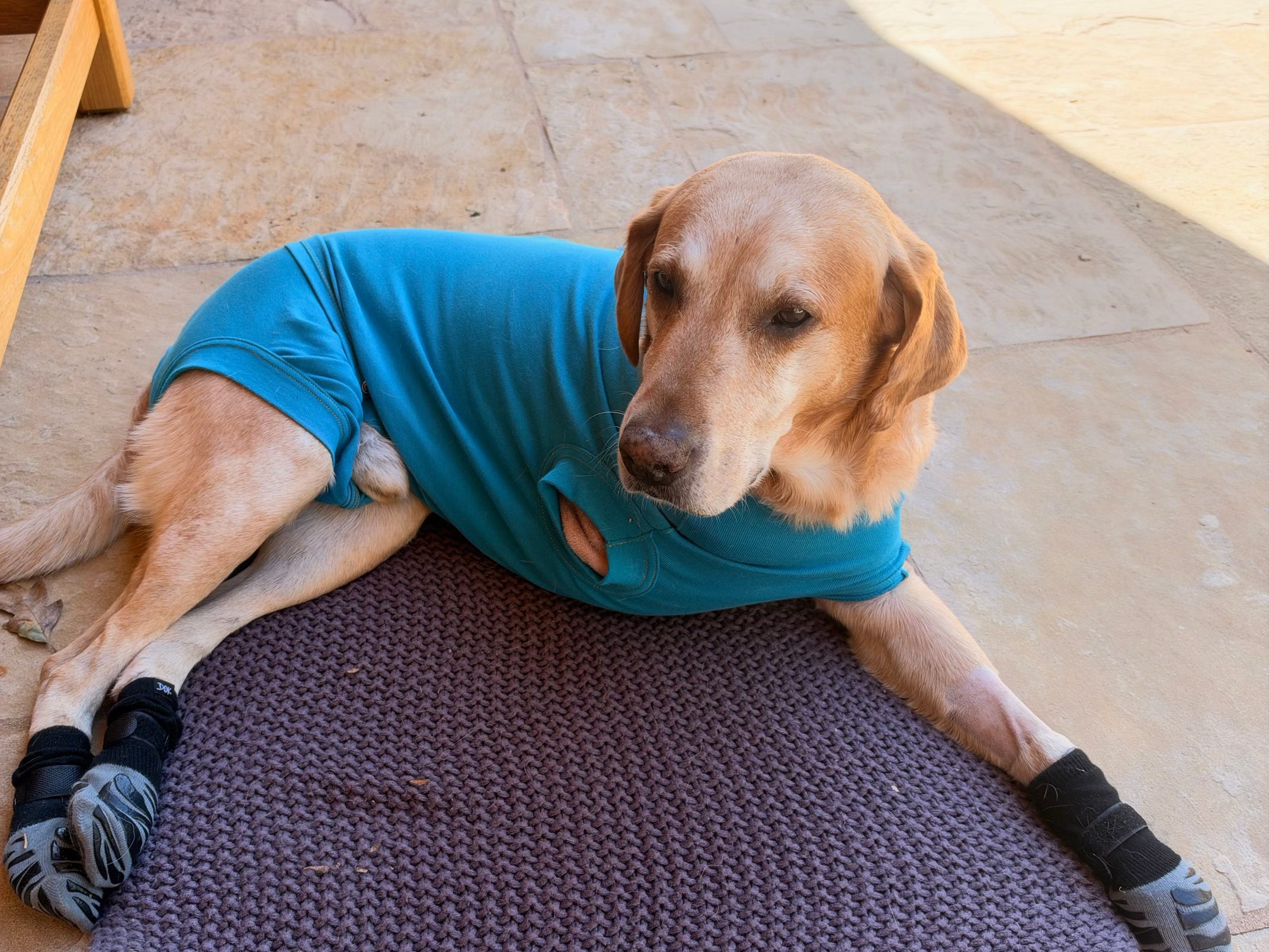
A few days ago, Cooper lost his front right leg to cancer.
He is now an official member of the Tri-Pawed Club.
I was frightened about what would happen after the surgery. Would he still be Cooper? Would he still have his relentless enthusiasm? That spark? That desire to run toward life?
As soon as he could stand, Cooper went searching for his ball.
He is reCooperating well.
And the gleam in his eye is still there.
Watching him has made me think a lot about aliveness.
I’ve spent the last few years discovering what remains when parts of the life you thought you were going to have suddenly disappear.
And maybe I’ve been asking the wrong question.
Instead of asking,
What have I lost?
perhaps the more useful question is:
What still makes me run toward life?
Cooper has supported me through some very difficult years, offering very little advice but an enormous amount of love and, frequently, a soggy tennis ball.
After my separation from my husband, Cooper moved right in beside me so I never had to sleep alone—or get cold.
And he has always been extremely diligent about reminding me when it is mealtime.
So, in Cooper’s honor, here are five things he has taught me about being alive.
1. Savor the moment.
Cooper rarely misses an opportunity to enjoy himself.
If I’ve been sitting at my computer too long, he’ll appear with a toy and deposit it in my lap.
Enough of that. Let’s play.
If I lose track of time, he reminds me that it is time for dinner.
Or a walk.
Or preferably both.
Cooper lives very much in the present tense.
I’m trying to get better at that.
For me, savoring sometimes looks like my morning coffee.
I make a special drip blend. I grind the beans. And instead of drinking it out of any old mug, I pour it into a beautiful china cup and saucer my friend Laverne gave me.
Every time I drink from that cup, I think of Laverne.
The coffee becomes more than coffee.
It’s a tiny ritual.
A moment of pleasure.
A connection.
Aliveness doesn’t always arrive as some enormous adventure.
Sometimes it’s coffee in the good cup.
2. Keep what you love within reach.
Cooper always carries a ball.
If he loses one, he combs the park looking for another.
If absolutely no tennis ball can be found, he will settle for a stick.
Cooper makes sure he is always prepared to do the thing that makes him happiest.
Which makes me wonder:
What is your ball?
What is the thing that lights you up?
The things that make us feel alive are often the first things we abandon when life becomes complicated.
We’ll dance later.
We’ll paint later.
We’ll travel later.
We’ll write later.
We’ll play later.
Cooper would find this completely ridiculous.
Keep your ball nearby.
3. Share your balls.
Yes.
I wrote that.
Cooper could simply walk around with his ball in his mouth, perfectly content with his own private enjoyment.
But he doesn’t.
He offers it to other people.
Perfect strangers.
Children.
Neighbors.
People who thought they were simply walking down the street minding their own business.
Cooper invites them into his joy.
Come play with me.
And most of the time, they do.
People laugh. They throw the ball. They get their hands dirty. For a few moments, they’re not thinking about their schedules or their problems or what they’re supposed to be doing.
They’re playing with a dog.
Joy grows when we offer it to someone else.
4. Really see people.
Cooper doesn’t simply drop his ball near someone and hope they’ll notice.
He carefully places it in front of his chosen person.
Then he looks up at them, directly in their eyes.
Not casually.
Intensely.
Ignoring him is extraordinarily difficult.
There is something powerful about being looked at that way.
I see you.
Will you play with me?
Cooper has cracked open many a tough shell with that stare.
And perhaps there is a lesson in that for us too.
How often do we really look at someone?
How often do we allow ourselves to be seen?
When we really see another person—and let them see us—something opens.
Connection begins with noticing.
5. Keep offering the ball.
This may be the lesson I need most.
Cooper firmly believes that when he offers someone his ball, they will throw it.
But occasionally someone doesn’t.
And here’s what’s remarkable:
Cooper doesn’t sulk.
He doesn’t walk away thinking,
Apparently my ball wasn’t good enough.
He doesn’t decide,
I shouldn’t have asked.
He doesn’t wonder,
Was I too much? Too needy? Too enthusiastic?
He doesn’t disappear into a shame spiral and vow never to offer his ball again.
He picks it up.
And offers it to somebody else.
That’s it.
No story.
No humiliation.
No abandonment of what he wants.
Just:
Huh. Not that person.
Next.
Imagine living that way.
Imagine wanting something without being ashamed of wanting it.
Imagine making the invitation without needing everyone to say yes.
Imagine understanding that someone’s refusal doesn’t make your desire foolish.
It simply means:
Not this person.
Not this time.
Pick up your ball.
Keep going.
Cooper doesn’t seem particularly interested in the leg he no longer has.
He’s interested in the ball that’s still in front of him.
Maybe that’s the lesson I need most right now.
Life changes.
Bodies change.
Relationships end.
Plans disappear.
Sometimes things we believed were permanent turn out not to be.
And loss deserves to be grieved.
But somewhere on the porch, there is still a ball.
Something that calls us forward.
Something that makes our eyes light up.
Something that makes us want to run toward life—even if running looks different than it used to.
Maybe the work is simply to remember what your ball is.
And keep picking it up.
What’s your ball?
What makes you feel so alive that, no matter what life takes from you, you want to keep reaching for it?
The Tarot Nook
The King of Swords
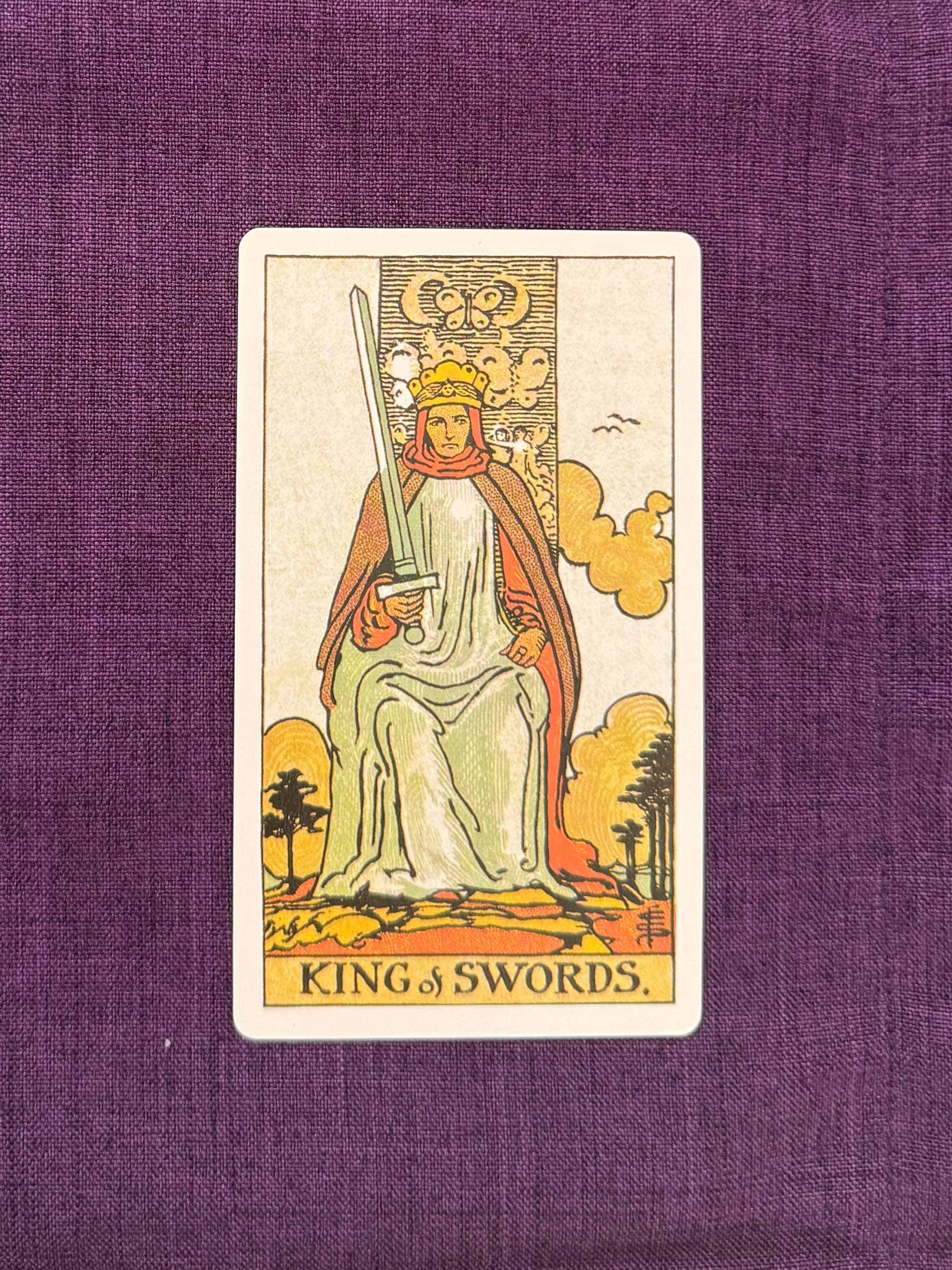
The King of Swords represents intellectual power, clear-cut truth, logic, and mental clarity. He looks at what happened versus the story we make it mean.
This King offers discernment. He asks if the story we are making is true.
That is exactly what Cooper does in Lesson #5. He doesn’t make a story up if people don’t want to play. He simply accepts it and moves on. No shame. No interpretations. Just the facts, please.
The King of Swords doesn’t deny loss, but he doesn’t let loss write a bigger story. Cooper lost his leg, but he’s still a champion. And still so full of love. No need for a pity party here.
Cooper is amazing 🩷