


Running errands. Answering emails. Buying groceries. Paying bills. Getting the car serviced. Going to the dentist. Finishing the laundry.
All the things on the TO DO list.
All the things we think we have to do.
All the things we believe we are SUPPOSED to do.
It is remarkably easy to go through much of life looking down. Doing. Checking things off. We become so consumed with doing life that we forget to ask ourselves a much more interesting question:
How do I actually want to LIVE it?
Mary Oliver put it best in “The Summer Day”: “Tell me, what is it you plan to do with your one wild and precious life?
Am I on the path I want to be on? If I could choose a different path, what would I choose? Do I even know?
That last question is the tricky one.
When you’re already walking down a particular road, you tend to keep looking straight ahead. You don’t notice the little paths going off to the side. You don’t consider that you could turn around. Or sit down. Or climb over the fence. Or decide that you don’t particularly like this road anymore.
For much of my life, I have been very good at editing myself to fit inside the box of my own expectations.
Be productive.
Be responsible.
Do something useful.
Finish what you start.
Don’t waste time.
Don’t be frivolous.
Eat your vegetables.
I am beginning to wonder how many of these rules I actually chose. And how many I simply inherited.
Living by rules you never chose is its own quiet form of self-abandonment.
With any luck, I may have another twenty good years. Twenty years when I can travel, think, walk, laugh, read, eat, love, explore, make mistakes, change my mind and decide what I want my days to look like.
Twenty years sounds like a long time. And it sounds incredibly short.
So I’ve been asking myself: what do I want to do with them?
Not what should I do. Not what would make me look accomplished. Not what would prove I had used my time productively.
What do I actually want?
I look at my mother and laugh a little. She never, ever imagined that she would live for a year in Paris. It wasn’t on her bucket list. It wasn’t even in the realm of her consciousness.
She lived there because I had a dream.
My mother is the ultimate Timex watch. She takes a licking and keeps on ticking. Whatever life handed her, including a year in Paris, she absorbed and carried on.
There is real strength in that. But I want something different for my next twenty years. Not just to endure what comes. To choose it.
So I’ve started making a list.
Not resolutions. Not goals. Permissions.
Things I am giving myself permission to believe, enjoy, stop doing, start doing, or simply question.
Here is what I know so far.
1. Read in the middle of the day.
I have spent a tremendous amount of my life believing I should be productive. Achieve something. Finish something. Get through the list.
And don’t misunderstand me. I am a great believer in achievement. If there is something you want to build, BUILD IT.
But productivity is no longer going to be the primary measure of whether I had a good day.
Which brings me to reading.
For some reason, reading during daylight hours has always felt vaguely illicit. If the sun is out, shouldn’t I be doing something? Going somewhere? Exercising? Crossing something off my list?
Reading was reserved for bedtime, when all productive possibilities for the day had finally been exhausted.
What nonsense.
I love to read. Why would I restrict something I love to the fifteen minutes before I fall asleep?
So I am giving myself permission to sit on the sofa at two o’clock in the afternoon and read a book.
Even if the sun is shining.
Even if there are dishes in the sink.
Even if somebody, somewhere, is being productive.
I don’t need to earn my day.
2. Eat dessert first.
This is becoming increasingly important because my appetite is not what it used to be.
I do not want to eat all the broccoli then have no room left for the strawberry shortcake. That would be tragic.
Or the peach crumble.
Or an île flottante floating in a glorious pool of crème anglaise.
I can honestly say I have never experienced anything approaching ecstasy while eating broccoli.
Crème anglaise?
Baby, now we’re talking.
I am not suggesting we abandon nutrition entirely. Apparently vegetables still have their place.
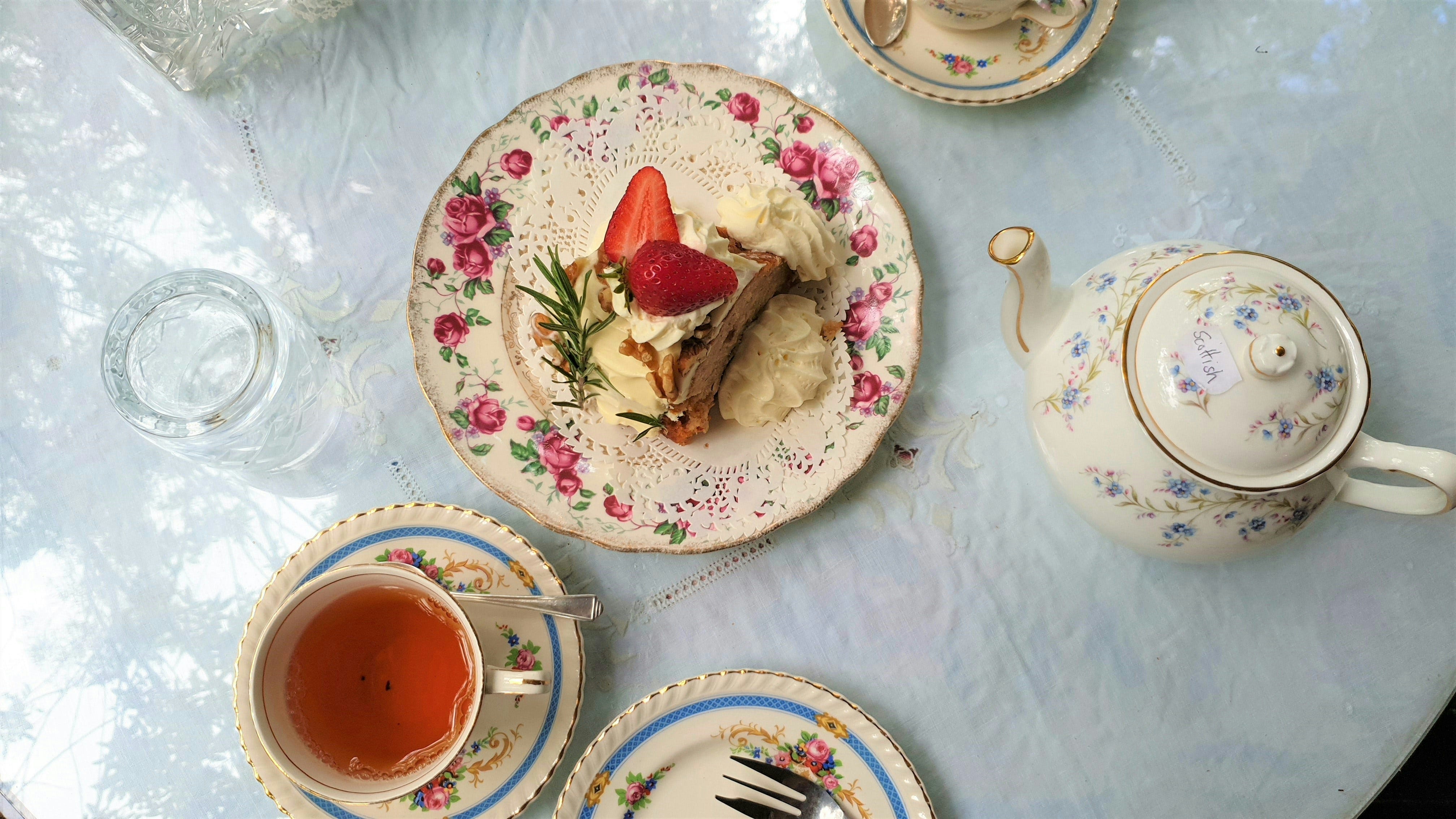
But if there is something you really love, perhaps stop automatically saving it for last. The trip. Good china. The dress you’re keeping for a special occasion.
This was never really about dessert.
3. Desire is meant to be enjoyed.
A few years ago, I read Patrick deWitt’s French Exit. Frances Price is running out of money and nevertheless continues to surround herself with beauty and style.
I understand the pull of that, though my version is quieter.
For years, I have put off buying things I coveted. Partly because I genuinely enjoy the act of coveting. If I buy the thing, I can no longer covet it. Then I have to find something new to covet.
I’ve also realized that sometimes I enjoy the IDEA of possessing something more than actually possessing it. Once you own an object, it becomes an obligation. You have to store it. Maintain it. Insure it. Find someplace to put it.
Sometimes I can simply admire the beautiful coat, painting, chair or handbag and enjoy wanting it.
Desire itself can be delicious.
I don’t have to turn every desire into an acquisition. But I also don’t have to apologize for wanting beautiful things.
Wanting is information. It tells me something about what delights me.
4. I do not have to finish everything on my plate.
If only you knew how deeply ingrained this one is.
My mother is 93 and has Alzheimer’s, and she STILL finishes everything on her plate. If you try to take that plate away before she has eaten every last morsel, she will probably swat you.
We finished our plates growing up. No exceptions.
This wasn’t particularly challenging on spaghetti-and-meatball night. Liver-and-onion night was another matter.
Some rules go so deep they outlast memory itself.
But here’s the revelation: I am allowed to stop.
I can stop eating when I’ve had enough.
I can stop reading a book I don’t like.
I can leave a party when I’m tired.
I can abandon a television series after three episodes.
I can change my mind.
I can decide that something I started no longer deserves to be finished.
Apparently there is no celestial award waiting for the woman who dies having cleared every plate put in front of her.
What a relief.
And yes, this means I can leave the broccoli.
5. Some discomfort is worth choosing.
Before this turns into an essay advocating dessert, daytime reading and abandoning all responsibilities, there are things I intend to keep doing even though I don’t particularly enjoy them.
The gym, for example.
I am not what anyone would call a gym rat. I go because it is good for me. Much like broccoli.
But unlike broccoli, I know from experience that I will feel better after I work out. So I do it.
There is discomfort that depletes us. And there is discomfort that builds us.
I want to get better at knowing the difference.
Resistance training? Worth it.
Needless guilt? Not worth it.
I am not lazy. I am selective.
6. Give generously from what I actually have.
I love helping people. And for a long time I could talk myself out of doing it.
What could I possibly know that would help them?
Quite a lot, actually.
I have lived. I have screwed things up. I have learned things. I know people. I can make connections. I can encourage someone. I can offer perspective.
I can sit with a high school student, a new mother or a young adult who is trying to “find themselves” and say: You don’t have to know yet.
Sometimes what we have to give isn’t money. It’s attention. Experience. Encouragement. Hope. A phone call. An introduction. A belief in someone before they have quite learned to believe in themselves.
I have plenty of those things. I want to give them generously.
7. Ask for help.
I cannot do everything.
This has taken me approximately sixty-seven years to accept.
I am not a technical wonder. I am not naturally organized. I am not particularly efficient. There are people who can accomplish in twenty minutes what will take me four hours, three swear words and a complete collapse of confidence.
Why am I making myself do it?
There are people who actually LIKE spreadsheets. There are people who enjoy systems. There are people who understand technology.
Let them experience the satisfaction of using their gifts. I will use mine.
Knowing where I need help isn’t failure. It’s self-knowledge.
8. It is not frivolous to want to feel good about myself.
I was at the beauty parlor last week, and the woman next to me announced: “You should have your hair done every week! You would feel so much better about yourself!”
Immediately, I calculated what this would cost.
Then I thought about my great-aunt. She was a retired schoolteacher in Newark, New Jersey, and she had her hair done every Tuesday. Every Tuesday. It was apparently non-negotiable.
I have no idea how she afforded it. But clearly she had established her priorities.
I am not yet committing myself to weekly hair appointments. I am thinking about it.
Ninety percent of the time, my hair is pulled back into a ponytail under a red hat. Unless I am going to a Valkyries game. Then I wear a Valkyries hat.
Perhaps if my hair looked fabulous, I would take off the hat. (Although then my head might get cold. This IS San Francisco after all… Fog City.)
Clearly this requires further analysis.
But the larger point is this: it is not shallow to care about how I feel when I look in the mirror. It is not frivolous to wear the lipstick, get the haircut, buy the beautiful shoes or put on the good perfume simply because it changes the way I feel in my own skin.
Update
So this is what I’ve been wrestling with this week while Cooper is reCOOPERating from his surgery.
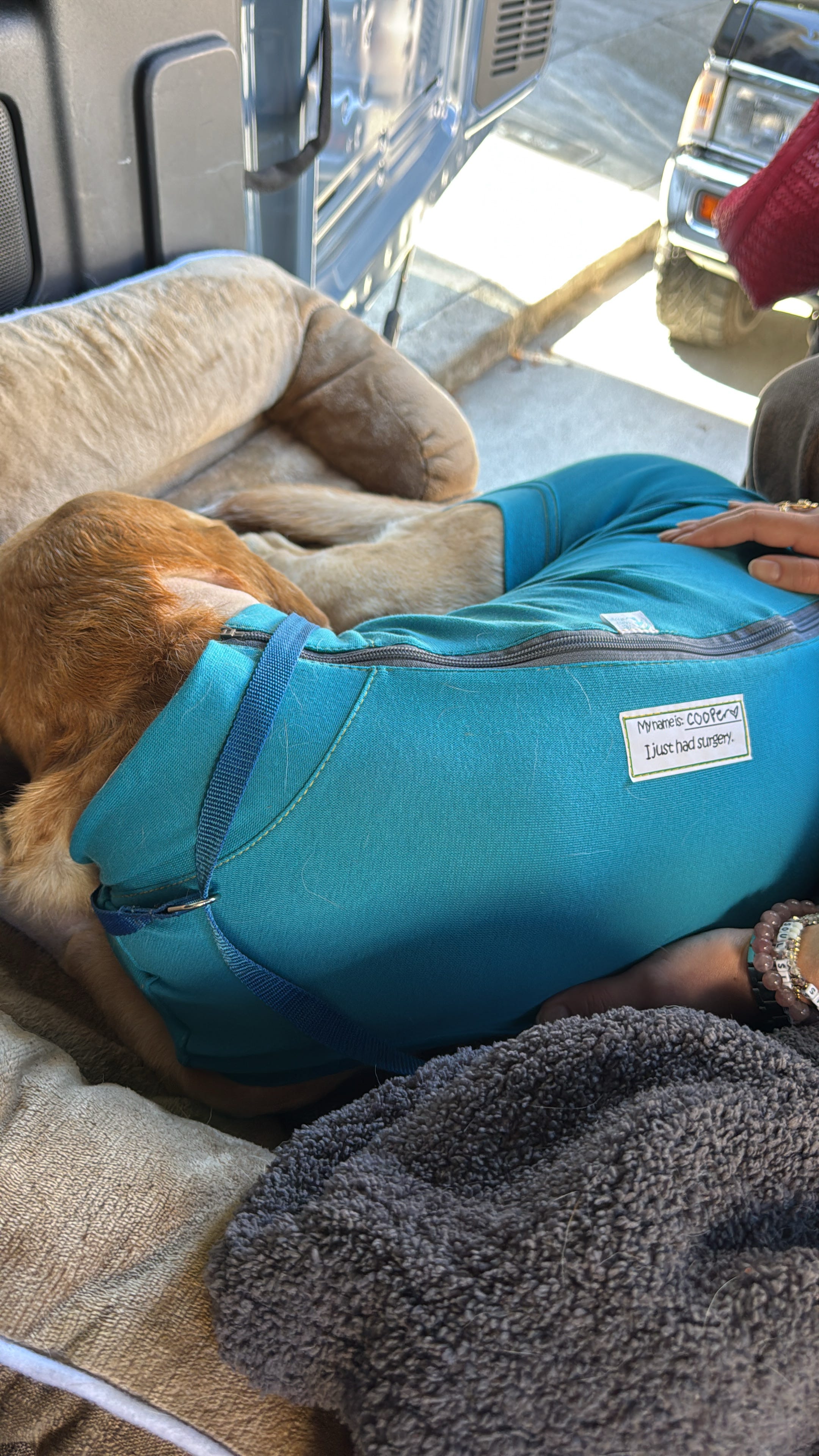
Perhaps he is teaching me something about all of this too.
In case you’ve been wondering, he appears to be adapting remarkably well to life as a tri-pawed Labrador. He still has the sparkle in his eye. He still wants his ball.
He is not sitting around contemplating the life he used to have. He is looking around for what still makes him come alive.
I don’t think the lesson is to pretend that losses don’t matter. They do.
Nor is it to abandon responsibility and spend the next twenty years eating crème anglaise while having my hair professionally blown out.
Although I suppose there are worse strategies.
Maybe it’s simply this: stop living so automatically.
Look up.
Question the old rules. Notice which ones still serve you and which ones you are following merely because you’ve always followed them.
Ask yourself what you want now. Not twenty years ago. Not what your mother wanted. Not what your husband wanted. Not what society tells you a woman your age should want.
What do YOU want to do with the life that is still in front of you?
I don’t have the complete answer yet. But I am beginning to think that twenty years is much too precious to spend living by rules I never consciously chose.
And somewhere on the porch, Cooper is looking for his ball.
Maybe I should be looking for mine, too.
What old rule are you ready to retire? And what permission would you give yourself for the years ahead?
The Tarot Nook
Judgement Reversed
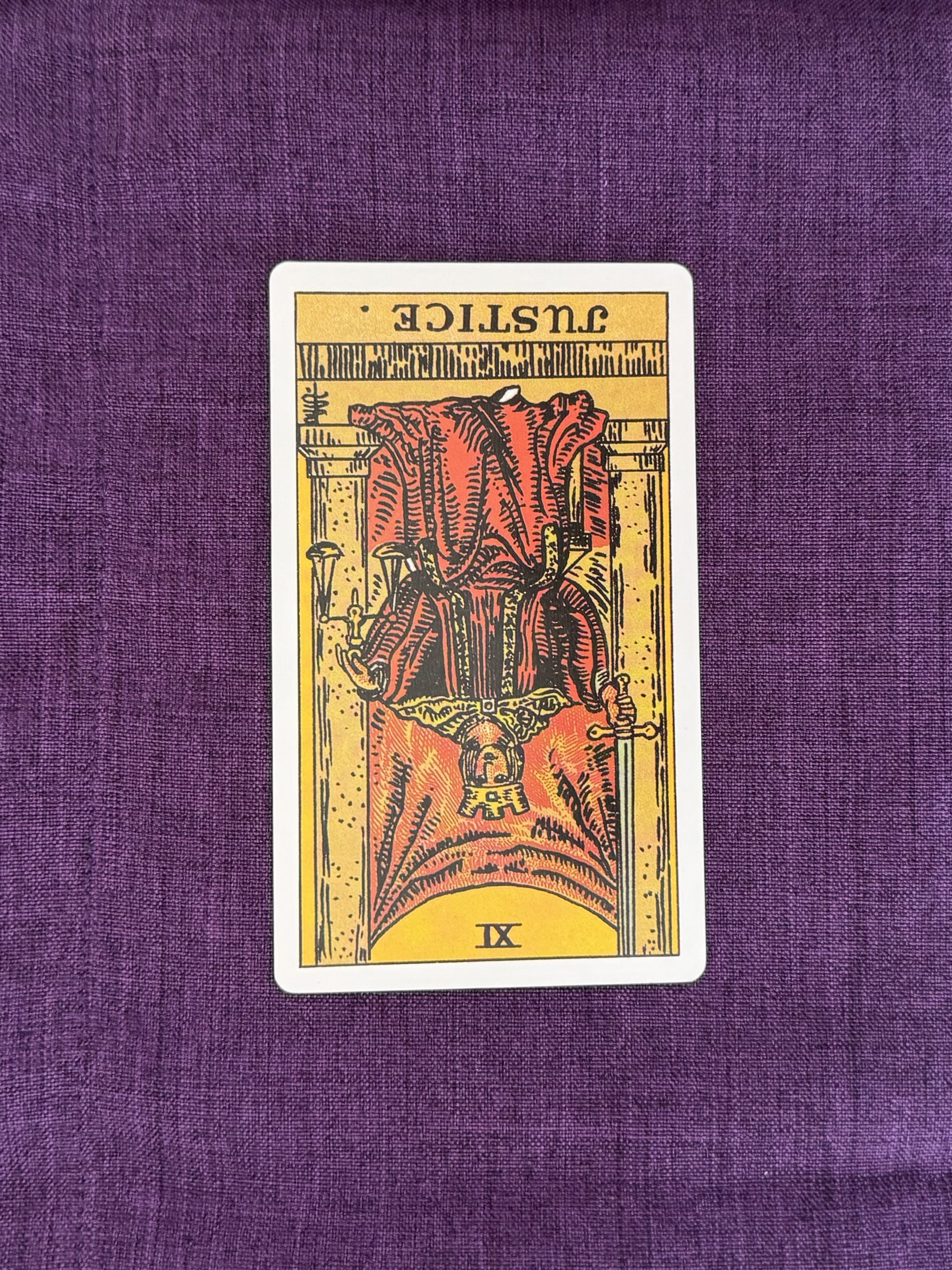
As I was writing this, I pulled the Judgment card reversed.
I had to laugh.
Here I am writing about a wake-up call, and I pull the card of awakening—upside down.
Judgement reversed can speak to self-judgment, ignoring our own inner call, and continuing to live according to old stories long after they have stopped serving you.
Maybe that is exactly what I am wrestling with.
For much of my life, there has been an invisible judge sitting somewhere in my head, determining whether I am being productive enough, useful enough, disciplined enough, responsible enough.
But perhaps the next twenty years aren’t about passing the test.
Maybe there isn’t a test.
Maybe the wake-up call is realizing that I am the one who gets to decide what makes a day—and ultimately a life—worthwhile.
Stop judging yourself by the old story, and answer the life that is calling you now.
Great piece, as usual. 😌❤️