



Who wrote the script that sex comes after crawling into bed at 9 or 10 p.m., when you are exhausted from taking care of everyone else all day?
Maybe that worked when I was 25.
But after kids? I couldn’t wait for them to go to bed so I could go to bed.
And yet there I was, lying beside my husband, feeling the quiet pressure to be available.
Not because I felt desire.
Not because I felt connected.
Because I thought that was what a good wife did.
I didn’t call it self-abandonment then.
I called it marriage.
I was in the trap of wanting to be “the good wife.” The wife who met her husband’s needs so he didn’t go looking elsewhere.
But no one ever talked about MY needs. NOT EVEN ME!!!
So who can I blame but myself?
I never spoke up.
(At one point, I did suggest we plan our sexual encounters. That thought was met with ridicule. “It’s supposed to be spontaneous!” After a long day of taking care of everyone else’s needs, spontaneity was not on the top of my mind. I wanted to bury myself in a good murder mystery, then fall asleep.)
The Good Girl Trap teaches us that to be loved, we have to be low-maintenance.
The Good Wife grew out of being the good girl. Doing as I was told, knowing what was expected and delivering it before I was asked, anticipating everyone else’s desires, and disregarding my own needs.
I had to be easy-going, responsible, considerate.
Somewhere along the way, I absorbed the hidden message that other people’s comfort was more important than my own truth. And my truth got buried.
I wasn’t praised for knowing what I wanted. I was praised for accommodating everyone else's wants. That’s the trap.
The Rewards
I didn’t just sacrifice myself for others willy-nilly. No. I was rewarded for the sacrifice. I got called “kind,” “generous,” “thoughtful,” “dependable,” and “a good girl.”
I was good at delivering for everyone else at my own expense.
The qualities I was being praised for were the very qualities that caused me to disappear.
I’ve spent decades being indispensable because I don’t know who I am or what I really want. I just felt NUMB.
Being a good person and being a self-abandoning person are NOT the same thing.
It is possible to be generous, loving, supportive, and compassionate without disappearing.
Where to go from here
Take an inventory of where you are and how you got here. Answer the following sentences.
I am often praised for being: ________________________
The thing I rarely ask for is: _________________________
I feel guilty when: _________________________________
The last thing I did just for myself was: _________________
Then ask yourself which version of you is getting all the attention? And which is being neglected?
For years, I thought being a good woman meant being selfless. I saw my mother live that out.
Now I see things differently.
A woman who constantly abandons herself doesn’t become more loving or more loved.
She becomes less alive.
The Great Return to YOU begins when you stop asking:
“What does everyone else need from me?”
and begin asking:
“What do I need from myself?”
Spend some time thinking about what it is you truly need.
The Tarot Nook
The Four of Pentacles Reversed
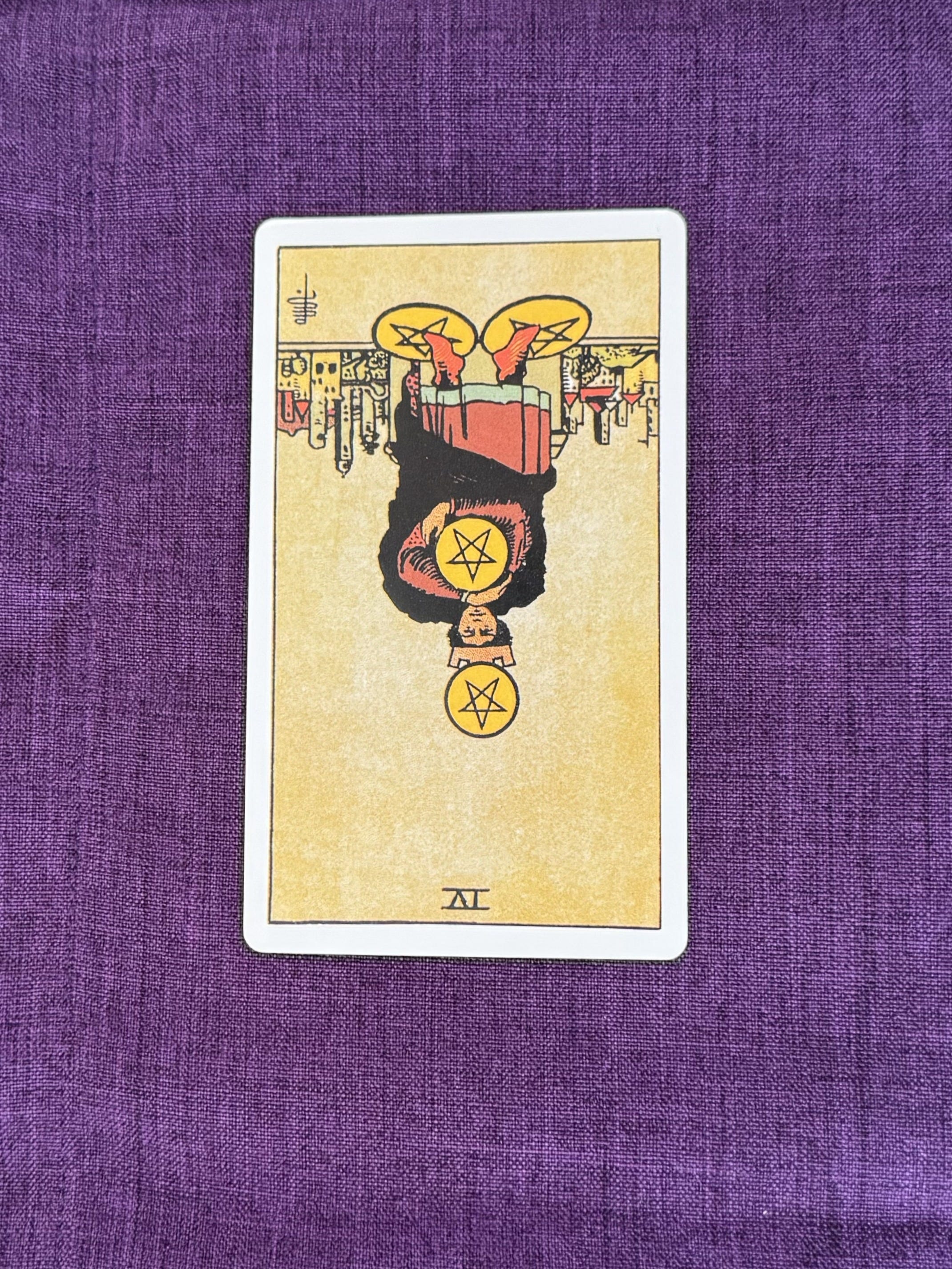
This week’s card is the 4 of Pentacles Reversed.
Upright, this card is about control, holding on tightly to security, old patterns, feeling safe.
Reversed, the card asks, What am I finally ready to let go of?
For years, I held tightly to the identity of the Good Girl. The helper. The caretaker. The one who made life easier for everyone else.
It was a survival strategy to earn love, a sense of belonging, and approval.
But it came at a cost.
Somewhere along the way, I began holding onto those identities more tightly than I held onto myself. I had imprisoned myself in these identities.
The 4 of Pentacles Reversed asks, "What are you ready to release?”
Perhaps the Great Return to YOU isn’t about becoming someone new.
Perhaps it’s about loosening your grip on who you had to become in order to be loved.
The Shadow Question
The card may also be asking, "What are you afraid will happen if you stop being the Good Girl?”
Most women don’t hold onto self-sacrifice because they enjoy suffering.
They hold onto it because they’re afraid of what comes next.
Will people be disappointed?
Will they call me selfish?
Will they still love me?
Will I still belong?
Those are very 4 of Pentacles Reversed questions.
See this next week as the loosening of a grip that has been held tightly shut. Add some ease into your day and your thoughts.
This is such a clear naming of the moment self-abandonment becomes indistinguishable from being “good.”
The line that really stayed with me is:
“I didn’t call it self-abandonment then. I called it marriage.”
Yes.
And I think that is the trap.
Not just being generous.
Not just being thoughtful.
Not just being a good wife, good mother, good woman.
But learning to disappear inside the role and then being praised for the disappearance.
Especially around sex.
Because there is a particular kind of grief in realizing your body became part of the service role.
Available.
Pleasant.
Low-maintenance.
Considerate.
Not because desire was present.
Not because connection was alive.
But because saying yes felt like what a good wife did.
That is not just a mindset.
It is often a habit built around a nervous system imprint.
The body has learned:
If I have needs, I may become too much.
If I disappoint him, I may lose safety.
If I say no, I may become selfish.
If I want something different, I may be a bad wife.
If I stop accommodating, I may not be loved.
So the habits form around the imprint.
Anticipating.
Softening.
Performing ease.
Not asking.
Not needing.
Being sexually available while quietly leaving the body.
That nervous system imprint can resolve.
And when it does, generosity does not have to mean disappearance.
Kindness does not have to mean self-erasure.
Sexual availability does not have to replace desire.
And being good no longer has to cost a woman access to herself.