


I sat listening to a high school Senior give her end-of-year presentation. She had had a challenging four years suffering from both illnesses and accidents. She spoke about her coping mechanism: a dresser in her mind where she kept her emotions and feelings, and when the feelings got too strong, she slammed the drawer closed.
What's In Your Freezer Anyway?
This led me to think of my own life– how I had used a similar compartmentalization strategy, how I glossed over painful comments or episodes by suppressing them. Sometimes I didn’t have time to deal with emotions because of what was happening, and I had to “get on with life.” Other times, I wasn’t sure how to deal with the pain.
It consumes energy to stay frozen and it eventually spoils.
It’s like putting the food in the freezer until you’re ready to prepare it. The problem is when more gets put in than is pulled out, and you end up cramming more and more in and don’t know what’s there. It consumes energy to stay frozen and it eventually spoils. And there’s no practical way to log everything that’s in there.
Why Compartmentalization Drains Energy
Keeping emotions, feelings, and memories below the surface level of consciousness takes mental and psychological energy. You are essentially like iPhones. You take in your energy charge when plugged in while you sleep and use that energy during the day. Sometimes you even need a recharge during the day. Over time, the battery holds less of a charge than it did in the beginning. That energy is used up with open apps or running difficult programs.

Your brains are the same. Holding emotions at bay drains our battery. The problem is, the emotions can burst out at inopportune moments. These can show up as misdirected anger– lashing out at someone who might have made a small mistake and your response is way over the top.
How To Deal with Suppressed Pain Constructively
Dealing with this involves integrating all of the parts of yourself and presenting your full authentic self. This doesn’t mean reliving painful memories over and over. It means finding a way to bring painful experiences into the story of your life without allowing them to hijack your energy.
One process that helps to accomplish this is through story telling or journaling. The goal is to turn the memory into a coherent story. The framework is: this is what happened, this is how it shaped me, and this is how I carry it now. Here’s a real example:
This is what happened:
In 2024, after more than thirty years of marriage, my husband asked for a divorce. It felt like the foundation of my life cracked open overnight. Everything familiar — my daily routines, my sense of partnership, even my vision of the future — was suddenly in question.
This is how it shaped me:
In the beginning, I felt shattered. I questioned my worth, my choices, and my ability to move forward on my own. But in that darkness, I also began to uncover strengths I hadn’t needed to call on before. I learned I could make difficult decisions, advocate for myself, and navigate uncertainty. I began to see that the version of myself I had tucked away during my marriage — the independent, resilient, and creative woman — was still very much alive.
This is how I carry it now:
Today, I carry my divorce not as a wound that defines me, but as a marker of transformation. It taught me that endings, as painful as they are, can also be beginnings. I now walk with a clearer sense of who I am, what I value, and what kind of life I want to create moving forward. My divorce is part of my story — not the drawer I keep shut, but the fire that fuels my next chapter.
Below is a template you can use to create your integration:
Narrative Integration Template
Step 1: This is what happened
Write down the facts of the situation, as if you’re telling the story to someone who doesn’t know you. Keep it simple and direct.
Example prompt: “In [year], [event] happened. Here’s what changed in my life…”
Step 2: This is how it shaped me
Reflect on how this experience impacted you — both the struggles and the strengths it revealed.
Example prompt: “At first I felt… But as time went on, I discovered…”
Step 3: This is how I carry it now
Claim the way you hold this experience today. Has it become a lesson? A source of strength? A reminder of your values?
Example prompt: “Now, I carry this experience as… It reminds me that…”
I find that if I add an affirmation at the end, I feel stronger. Something like:
“This part of my story does not define me, but it has refined me.”
or“I carry this not as a weight, but as wisdom.”
When I do this, I feel a sense of relief. I am reframing a painful experience in a way that is helpful. I am not making up a story, I am looking at my own story from a different angle.
This is essentially cleaning out the freezer! (which I need to do!)
Hope you find this helpful!
Tarot Card Pull
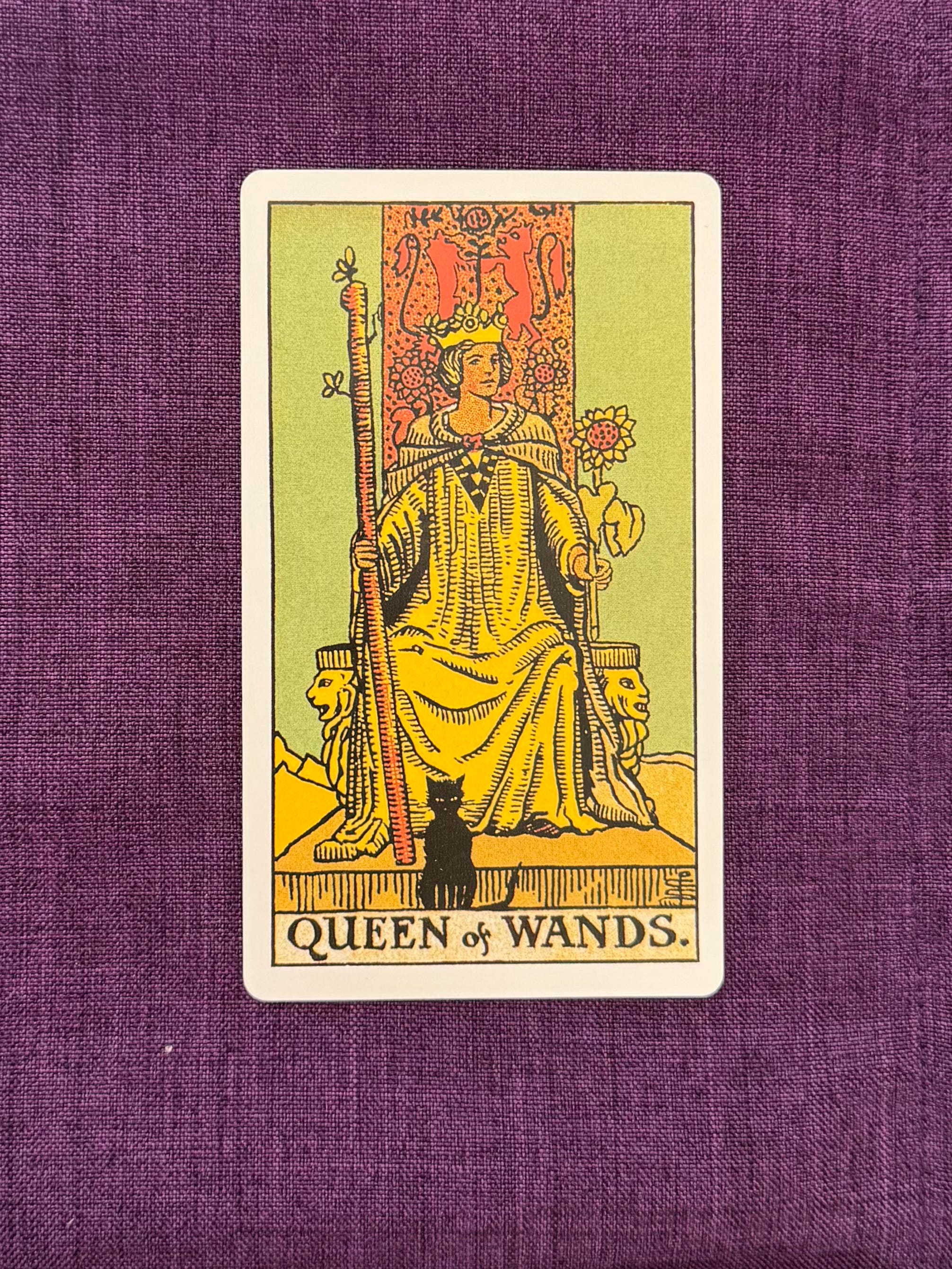
Today I pulled the Queen of Wands. This tells me today is about embodying confidence, vitality, and expressive power. She is the archetype of charisma and courage.
This is the perfect energy for clearing out some of that stuff from your freezer! Instead of closing the drawer on your feelings, the Queen give us the energy to channel it into bold, integrative presence.
In Summary
You have “drawers” in your mind where you try to tuck away what feels too heavy to carry.
But those drawers don’t stay shut forever.
The real work – and the real freedom – comes from learning to integrate those experiences into the larger story of who you are.
Integration isn’t about re-living the pain; it’s about giving it a place in our narrative so it no longer controls us from the shadows.
Like the Queen of Wands, you can step fully into your life when you harness our fire, your scars, and your strength– not by hiding them, but by letting them fuel our authenticity.
When you choose integration over compartmentalization you reclaim the energy once spent on suppression and instead radiate the kind of presence that inspires, uplifts, and shines brightly into the world.