



The painter stood in my kitchen looking slightly exasperated.
“Did you pick the cabinet color yet?”
He had already prepped the house and was ready to paint. The only thing holding up the project was me.
For months, I had known this decision was coming. I had collected paint samples, pinned inspiration photos, and stared at what felt like thousands of color options. Every time I tried to choose, I could actually feel myself shutting down.
I was like a turtle pulling its head back into its shell.
Have you ever looked at one of those paint decks? There are endless shades of white alone. Add wallpaper, countertops, flooring, trim, lighting, and fourteen rooms that all need to flow together, and suddenly one simple decision feels impossible.
At first, I thought the problem was choosing the right color.
It wasn’t.
The problem was that I had forgotten how to trust myself to make the decision.
That realization has everything to do with agency.
The Power of One Decision
Eventually, I stopped asking myself, “What color should I choose?”
Instead, I asked a better question:
“What will help me move this project forward?”
The answer was surprisingly simple.
I called Farrow & Ball and scheduled a color consultation.
For $300, I was hiring someone with expertise—not to make my decisions for me, but to help me make them with confidence.
Jordan arrived with her paint books, walked through the house, and began asking questions.
Not, “What color do you want?”
But questions that went much deeper.
“What do you want this room to feel like?”
“What are you drawn to?”
“How do you want people to experience this space?”
Those questions changed everything.
She wasn’t choosing paint colors.
She was helping me reconnect with my own vision.
When I showed her the wallpaper I’d chosen for the foyer, she immediately understood the direction I was heading. When I described wanting the living room to feel like an intimate speakeasy, she didn’t tell me I was wrong.
She built from my vision.
She suggested possibilities.
She narrowed the options.
She helped me see how each room could support the next so the entire house told one cohesive story.
She offered choices.
I made the decisions.
That distinction matters.
What This Taught Me About Agency
As I reflected on the experience, I realized I hadn’t been struggling with paint colors at all.
I had been strengthening three muscles of agency:
Choice.
Emotional Tolerance.
Boundaries.
Last week we talked about the first three muscles of agency:
Awareness
Self-Consultation
Desire
First you become aware that you’ve been abandoning yourself.
Then you begin asking yourself what you think.
Finally, you reconnect with what you actually want.
Those muscles prepare you for this week’s work.
Because once you know what you want...
you have to choose.
The Muscle of Choice
Agency requires decisions.
Not perfect decisions.
Just decisions.
For years, I had become accustomed to looking outside myself for answers.
What did everyone else think?
What would make the most sense?
What would make everyone happy?
This project forced me to practice something different.
I had to decide.
Not because I knew my choices would be perfect.
But because every decision reminded me that I was capable of directing my own life.
Agency isn’t built by waiting until you’re certain.
It’s built by choosing.
The Muscle of Emotional Tolerance
Here’s where the real work began.
Everyone had an opinion.
The painter wanted decisions so he could keep moving.
The project manager wanted me to think through every detail.
My children had ideas about how the house should look.
Everyone was trying to help.
But I found myself trying to accommodate everyone.
Then I realized something.
When you try to make everyone happy, you eventually lose yourself—and no one ends up happy anyway.
The real challenge wasn’t choosing paint.
It was learning to tolerate the discomfort of knowing someone might not agree with my choices.
That is emotional tolerance.
Can I tolerate someone else’s disappointment?
Can I tolerate not being universally liked?
Can I tolerate making a decision that someone else wouldn’t make?
Those are muscles.
And like every muscle, they grow stronger with practice.
The Muscle of Boundaries
Boundaries often get misunderstood.
People think they’re about controlling other people’s behavior.
They’re not.
Boundaries communicate what you will participate in.
Jordan never crossed my boundaries.
She didn’t tell me what I should like.
She didn’t impose her taste.
She worked within the parameters I established.
That’s exactly how healthy boundaries work.
They create a framework within which choices can be made.
The clearer your boundaries become, the easier your decisions become.
Because you’ve already decided what matters most.
Looking Back
One of the reasons I couldn’t see my self-abandonment while I was living it is because I was inside it.
A close friend—someone who had known me before I was married—saw me about a year ago and quietly remarked how much smaller my life had become.
At first, I resisted hearing it.
Then I realized she was right.
I often tell my children,
“You can’t read the label from inside the jar.”
When you’re inside your own life, gradual changes are almost impossible to see.
Sometimes someone who loves you can see what you’ve stopped noticing.
That conversation became one of the first sparks that woke me up.
Your Practice This Week
Think about one decision you’ve been postponing.
It doesn’t have to be life-changing.
It might be something as simple as saying yes.
Or saying no.
Ask yourself three questions:
What do I truly want?
What discomfort am I afraid of feeling if I choose it?
What boundary would support that choice?
Then make the decision.
Not because you’re completely certain.
But because every decision strengthens your agency.
Every choice is another vote for becoming the woman who trusts herself.
Next week we’ll strengthen the next three muscles of agency:
Self-Trust, Standards, and Congruence.
Until then, remember:
You don’t build agency by making perfect decisions.
You build it by making your own.
The Tarot Nook
The King of Wands Reversed
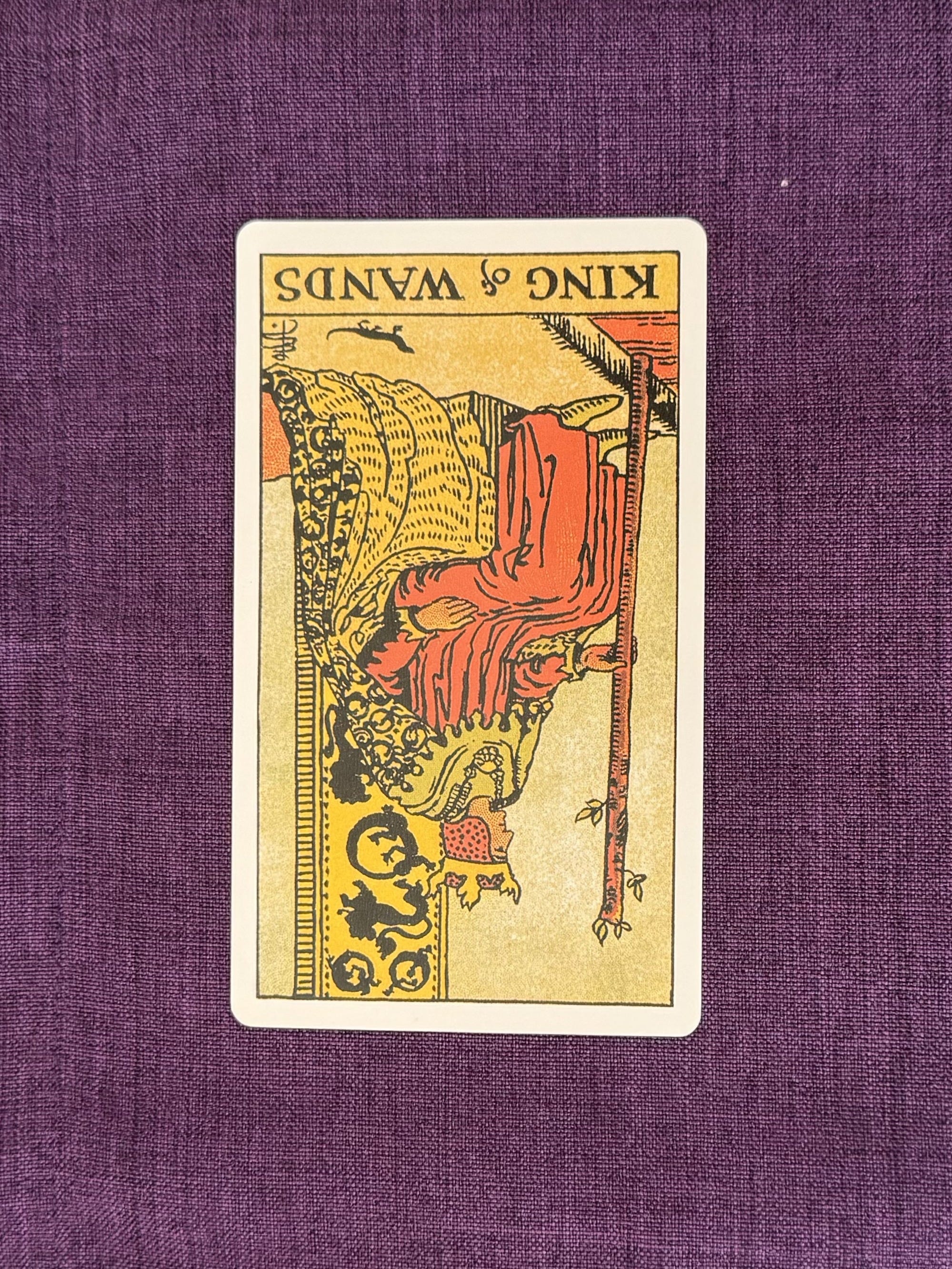
The King of Wands is a visionary. Upright, he trusts his judgment and confidently leads from his own inner compass. Reversed, he reminds us what happens when we surrender our authority to everyone else’s opinions.
This week’s blog is about strengthening the muscles of choice, emotional tolerance, and boundaries. Those muscles ask us to make decisions that reflect our own values—even when others might choose differently.
When I found myself overwhelmed by something as simple as choosing paint colors, it wasn’t because I lacked good taste or creativity. It was because I had spent years becoming more attuned to everyone else’s opinions than my own. The King of Wands reversed gently asks, “Whose voice is guiding your decisions?”
The goal isn’t to ignore advice. Jordan’s expertise was invaluable. The goal is to remember that advice should inform your choices—not replace them.
The King invites us to reclaim our inner authority. To trust our vision. To lead ourselves with courage instead of seeking approval.
This week, notice where you’ve handed someone else the crown. Then quietly place it back where it belongs.